




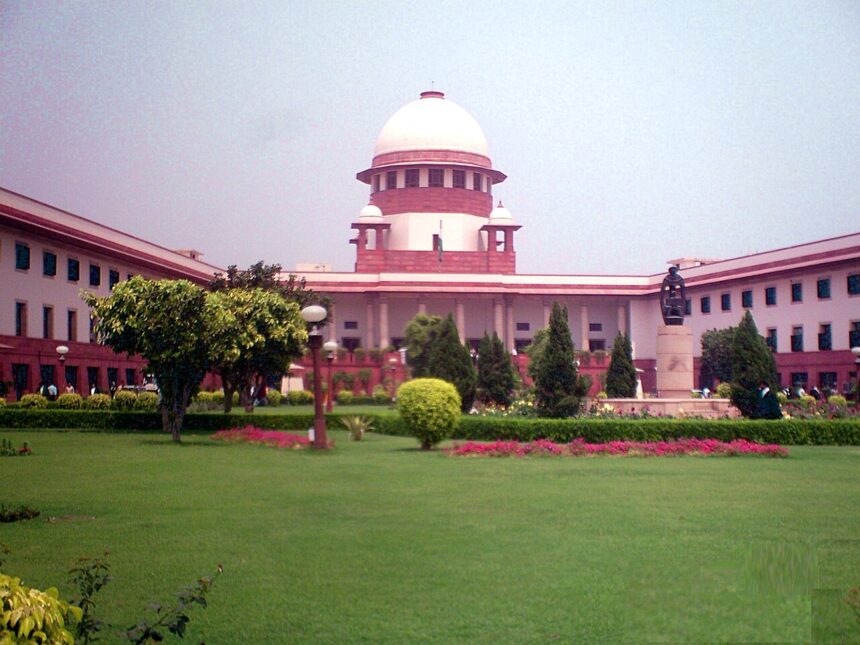
New Delhi: The Supreme Court of India on Tuesday issued notice to the Central Government and the State Bank of India on a fresh petition demanding complete and unredacted disclosure of electoral bond transaction data, including the full mapping of donors to political parties, following the SBI’s submission of partial data to the Election Commission of India last month.
A bench comprising Chief Justice D Y Chandrachud and Justices J B Pardiwala and Manoj Misra asked the Solicitor General to file a response within three weeks, and listed the matter for detailed hearing in the following month. The bench said it would examine whether the data released so far by the Election Commission fully complied with the spirit and letter of its earlier landmark judgment.
The petition, filed by the Association for Democratic Reforms (ADR), argued that the SBI and the Election Commission had published donor and redemption data in separate lists, making it “deliberately difficult” to match individual donors to specific political parties. The petitioner contended this defeated the transparency objective behind the Supreme Court’s February order striking down the Electoral Bond Scheme.
In its February 15 judgment, a five-judge Constitution Bench had unanimously struck down the Electoral Bond Scheme as unconstitutional, holding that voters had a fundamental right to know about political financing. The SBI was ordered to submit all bond data to the Election Commission, which was then directed to publish it on its website.
Senior advocate Prashant Bhushan, appearing for the petitioner, argued that cross-referencing the published data showed that several large corporate donors had received government contracts, regulatory approvals, or CBI/ED relief shortly after making substantial electoral bond purchases — a quid pro quo that demanded judicial scrutiny.
The Solicitor General said the government would file a detailed response and that the matter had been “fully complied with” in accordance with the court’s earlier order.